
You’ve probably already seen the campus safety email.
You know the one.
A wall of text.
A few bland bullet points.
Something about walking in groups and making “smart choices.”

You skimmed it. Maybe laughed. Definitely did not memorize it.
Fair.
Most college safety advice is not exactly wrong. It’s just delivered like a robot wrote it after attending one meeting with legal. It acts like staying safe is all about being “more responsible,” when real life is messier than that. You’re tired. Busy. Distracted. Sometimes stressed. Sometimes out late. Sometimes three drinks in and fully convinced ordering curly fries is your best idea of the night.
So this is the version you actually need.
This is not a lecture. It’s a survival guide.

You do not need to become paranoid. You do need a few habits that still work when your brain is running on bad sleep, group chat chaos, and iced coffee.
Here’s what actually matters.
Your Setup Matters More Than Your Vibes
A lot of safety advice tells you to “be alert.”
That sounds nice. It also falls apart fast when it’s midnight, you’re tired, and your phone is glowing like a tiny hypnosis machine in your hand.

The biggest safety wins usually come from setting up your environment before anything goes wrong.
That’s not dramatic. It’s just smart.
National student health data shows that around 83% of students feel very safe on campus during the day, but only about 36% feel very safe at night. That’s a huge drop. And it’s not because everyone suddenly loses common sense after sunset. It’s because darkness, isolation, and poor visibility change the risk.
So stop relying on “I’ll figure it out.”
Build your default settings now.

Do this before you need it
- Learn the well-lit routes between your dorm, library, parking area, and party spots
- Find the campus call boxes
- Save the campus escort number and late-night shuttle info in your phone
- Set up any school rideshare partnership before your first late night
- Share your location with one person you trust when you’re out late
CTA: Save your campus escort number now. Not later. Now.
Tiny habit, huge payoff
Walk with your head up.

Not in a fake inspirational way. In a literal way.
If you’re staring at your phone while walking, your awareness drops hard. It also makes you look distracted, which is not the energy we want to project at 12:47 a.m. outside the student center.
Lock It or Lose It
This one is so basic that people ignore it.
Then their stuff disappears.

Campus security teams repeat the same message every year because people keep proving them right: a lot of theft and unauthorized entry happens through unlocked doors, not dramatic break-ins.
Translation: nobody needs Oceans Eleven skills if your door is already open.
Lock your dorm room.
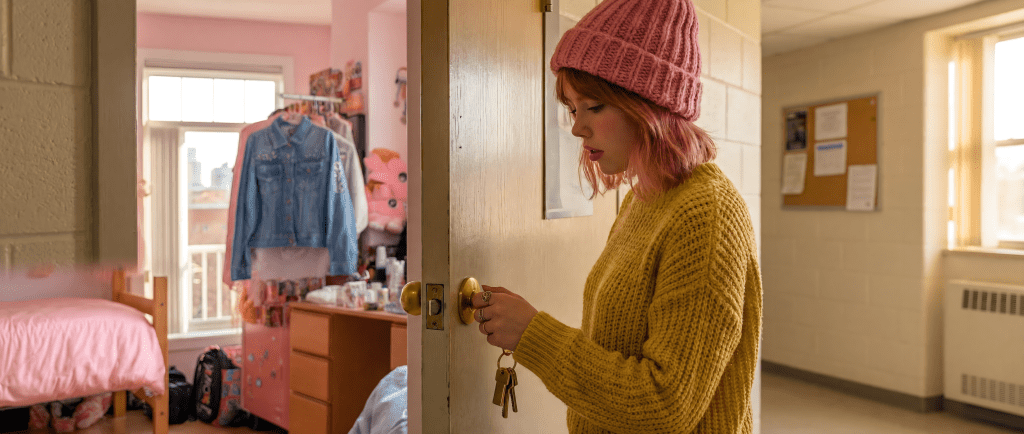
Lock it when you leave for two minutes.
Lock it when you’re showering.
Lock it when you’re inside.
Yes, even then.
If you live in a dorm
- Lock your door every time
- Do not prop open building doors
- Do not let random people tailgate in behind you
- Report weird stuff instead of assuming someone else already did

That last part matters.
Nobody else “probably already reported it.”
That imaginary responsible person is not real.
If you live off campus
Your apartment setup matters too.
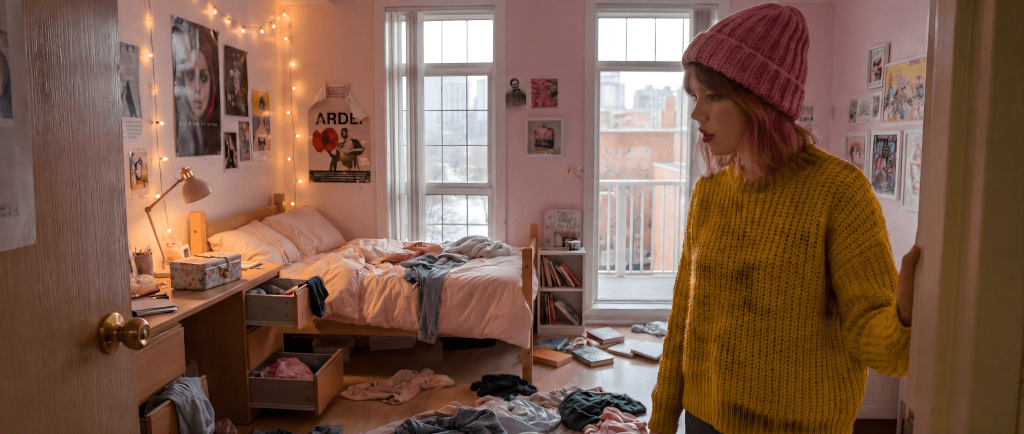
Low-effort things can make a big difference:
- Use a deadbolt
- Check that windows actually lock
- Make sure entryways are lit
- Trim or avoid heavy cover near doors
- Agree with roommates on guest rules
- Know who has keys
This is not being paranoid. This is adding friction to bad outcomes.
And friction works.
Party Smart, Not Delusional
Let’s skip the fake moral speech.

Some college students drink. Shocking news.
The real issue is not whether alcohol exists. The issue is whether you have a plan before alcohol starts making your decisions sound brilliant.
The CDC has noted that excessive alcohol use among people under 21 contributes to injuries, crashes, violence, and sexual assault, with around 4,000 deaths each year in that age group in the U.S.

That’s not “just part of college.”
That’s preventable harm.
Research on protective behavioral strategies shows that students who use simple drinking habits have lower alcohol-related harm.
So yes, the boring stuff actually works.

The no-BS party checklist
- Set a drink limit before you go out
- Eat before you start drinking
- Keep track of what you’ve had
- Skip drinking games if you want any control over your night
- Never leave your drink unattended
- Never take a drink you didn’t see get made
- Stay with people who would actually leave with you
If your friend group says “we always stick together” but vanishes the second someone cute appears, that is not a system. That is a myth.
Your exit plan matters most
The smartest move of the night is knowing how it ends.
Before you go out, know:

- How you’re getting home
- Who you’re leaving with
- What your backup ride is
- What your “we’re done” signal is
A real safety plan sounds like this:
“If either of us wants to leave, we leave. No debate.”
That’s it. Clean. Useful. Easy to remember when everyone is loud and one person has suddenly become a philosopher in the kitchen.
Know when it’s a medical emergency
Alcohol overdose is serious.
Watch for:
- Confusion
- Passing out or not staying awake
- Vomiting
- Seizures
- Slow or irregular breathing
- Cold body temperature
If you see that, call for help.
Many schools have Good Samaritan or medical amnesty policies. That means you usually will not get in trouble for calling 911 when someone is in danger.
CTA: Look up your school’s Good Samaritan policy tonight and screenshot it.
Don’t Get in the Wrong Car. Ever.
Rideshares feel normal now, which is exactly why people get sloppy.
The danger zone is simple: you’re in a rush, it’s dark, you’re distracted, and your battery is at 9%.
Bad combo.
Campus police guidance is pretty consistent on this stuff, and honestly, it should be burned into your brain.
Rideshare rules that are not optional
- Request the ride from inside
- Match the license plate
- Match the car make and model
- Check the driver in the app
- Ask who they’re picking up
- Sit in the back seat
- Share your trip with a friend
Do not walk up and say, “Are you here for Emma?”
Make them say the name first.
If anything feels off, leave.
Wrong plate? Leave.
Wrong car? Leave.
Driver acting weird? Leave.
Being awkward for 30 seconds is better than being unsafe for 30 minutes.
CTA: Turn on rideshare trip sharing in your app now.
Your Brain Is Part of Your Safety Plan
A lot of college safety guides treat mental health like a separate topic.
It’s not separate.
Your mental state affects your judgment, your reactions, your energy, your boundaries, and your ability to notice when something is wrong. If you’re severely anxious, deeply depressed, badly sleep-deprived, or drowning in stress, your safety habits get weaker.
That’s just real.
Data from the Healthy Minds study shows mental health challenges are common among college students, and the treatment gap is still real. But support options have improved. Many campuses now use stepped care, which means help is not just “wait forever for weekly therapy.”
It can include:
- Brief counseling
- Group support
- Skills workshops
- Teletherapy
- Digital CBT tools
- Crisis support
- Psychiatry referrals
National data shows the average wait is about six days for first contact and about eight days for a first therapy appointment.
That’s not instant. But it also means you should not wait until you’re in full meltdown mode.
If you’re struggling, do this
- Book the intake appointment early
- Ask what support exists while you wait
- Check if your school offers telehealth
- Ask about emergency grants, food help, or housing support if money is the issue
Recent data from the Center for Collegiate Mental Health found that about one in four students entering counseling reported at least one area of financial insecurity, and those students showed higher distress.
So if your stress is about rent, groceries, textbooks, meds, or transportation, say that.
You are not “bad at coping.”
You might just need actual support.
Your Phone Is Wrecking Your Sleep
This one feels small until it isn’t.
A 2025 review found that students with problematic smartphone use had higher rates of poor sleep, anxiety, and depression.
And bad sleep wrecks everything.
It messes with your mood.
Your judgment.
Your impulse control.
Your patience.
Your ability to handle conflict without turning one weird text into a 2 a.m. emotional disaster.
Protect your sleep like it matters, because it does
- Turn off nonessential notifications at night
- Don’t argue over text when you’re exhausted
- Don’t fall asleep scrolling
- Don’t sleep with your phone under your pillow
- If a conversation gets intense late at night, pause it until tomorrow
You do not need a monk-level digital detox.
You just need some boundaries.
Build Your People Before You Need Them
College can get lonely fast, even when you’re surrounded by people.
And loneliness is a safety issue.
Not because being alone is automatically dangerous, but because isolation means fewer people notice when something is off.
Research on belonging in higher education shows students who feel like they don’t belong are more likely to deal with depressive symptoms and worse psychological functioning over time. Structured peer support also tends to help more with stress and anxiety than random social contact.
So no, your support system should not be one roommate, one situationship, and one friend who takes six business days to reply.
Build a real support net
- Join one recurring group or club
- Have one person in class you can text
- Have one person outside class you trust
- Keep at least one backup person in your circle
- Let people know when you’re having a rough week
Redundancy is not clingy.
It’s smart.
If It Feels Off, Leave
When it comes to sexual and interpersonal violence, the evidence is pretty clear: skills-based prevention works better than passive awareness training.
So let’s translate that into real life.
You do not need a perfect script.
You need a few usable moves.
Practice these lines now
- “Hey, come with me.”
- “We’re leaving.”
- “She’s with us.”
- “Nope, not happening.”
- “I’m out.”
That’s enough.
You do not owe politeness to a bad feeling.
If a person, place, or vibe feels off, that is enough reason to go. You do not need courtroom-level proof. Your discomfort counts.
Make a Crisis Plan While You’re Calm
This part sounds intense, but it’s one of the most useful things in this whole guide.
A safety plan is not just for “serious” people or “worst-case scenarios.” It’s a practical tool.
The SAMHSA safety-plan model includes:
- Warning signs
- Coping strategies
- People and places that help
- Professional contacts
- Emergency steps
A recent study on digital safety planning found that using a plan was linked to a 50% lower likelihood of later emergency visits for suicidal behavior.
That is a massive return on 20 minutes of effort.
Put this in your notes app
- My warning signs:
- What helps me calm down:
- Who I can call:
- Where I can go:
- Campus resources:
- Emergency contacts:
- 988:
- 911:
If you have any history of panic attacks, self-harm, suicidal thoughts, trauma responses, eating disorder relapse, or substance crises, do this now.
Not later.
Now.
CTA: Save 988 in your phone today.
The Bottom Line
College safety is not about becoming hyper-alert 24/7 like you’re the main character in a thriller.
It’s about making the safest next step the easiest one.

Set up your environment.
Lock your door.
Make your exit plan before the party starts.
Check the plate.
Protect your sleep.
Build your people.
Ask for help early.
That’s the strategy.
Not perfection.
Not paranoia.
Just smart systems that still work when life gets chaotic.
Quick Reality Check: How Strong Are Your Safety Habits?
Drop your score in the comments:
How many of these have you already done?
- Saved your campus escort number
- Turned on rideshare trip sharing
- Looked up your school’s Good Samaritan policy
- Built a late-night ride home plan
- Made a basic crisis plan
- Identified two people you’d call if things went sideways
0–2: You need a setup reset.
3–4: Solid start. Tighten the gaps.
5–6: Honestly? Elite behavior.
What’s the one safety habit every college student should set up this week?
 Ashlee Marie Hilton
Leave a comment